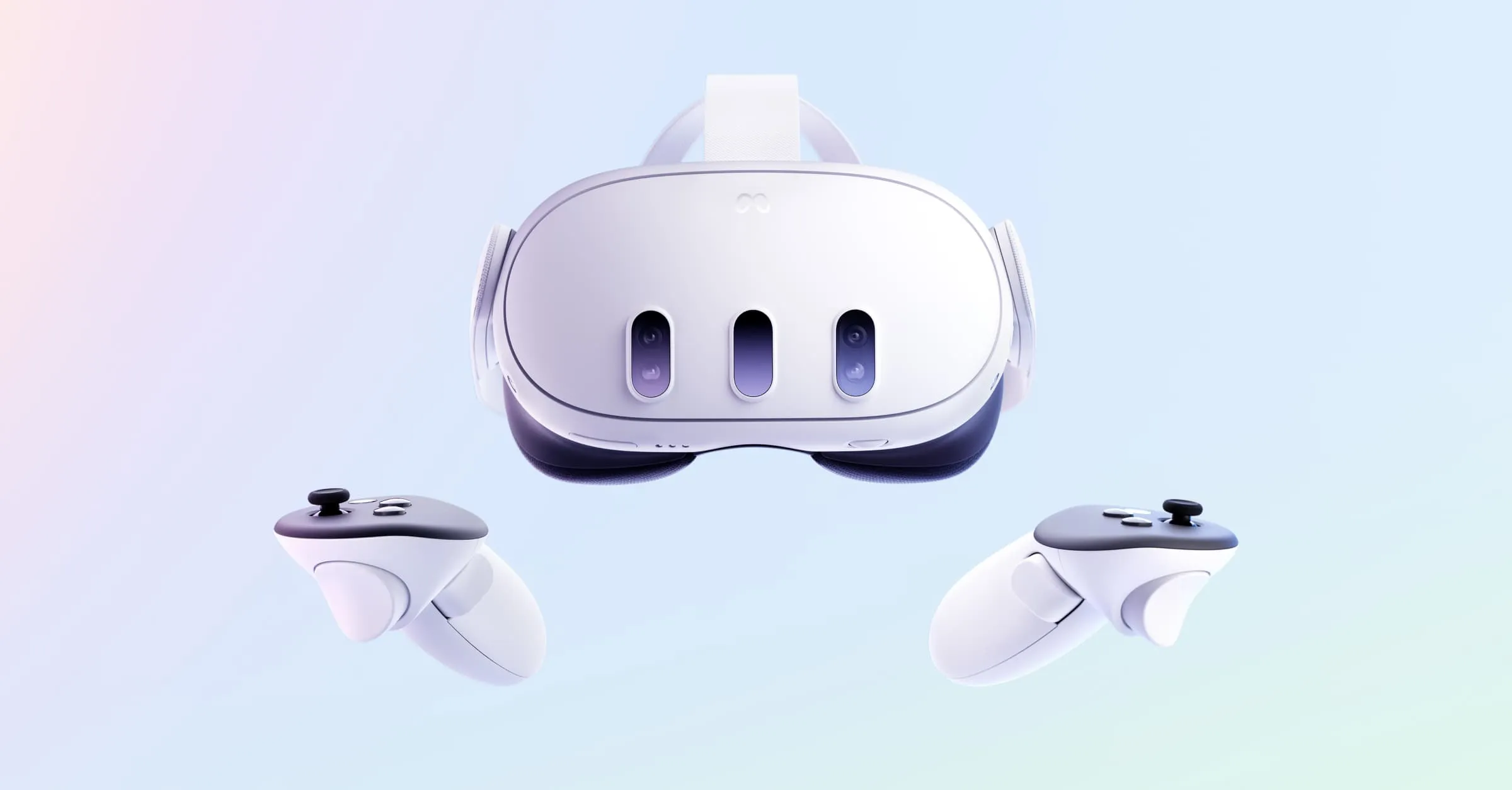

The Meta Quest 3 has arrived as a groundbreaking standalone VR headset that delivers impressive performance, improved comfort, and truly immersive virtual reality experiences without needing a PC or console. After extensive testing, this Meta Quest 3 review reveals why it’s setting a new gold standard in standalone VR technology.
Performance: Power That Delivers
The Meta Quest 3 packs the Snapdragon XR2 Gen2 processor, which doubles graphics horsepower compared to the Quest 2. This performance boost translates to smoother gameplay, better visual fidelity, and more complex VR environments that actually work.
In practical testing, the Meta Quest 3 handles games like Assassin’s Creed Nexus VR with remarkable smoothness. The high refresh rate ensures motion smoothness is strong, and you feel surrounded by the virtual environment without too much of a “tunnel” effect. Graphics are noticeably sharper, with better texture detail and lighting effects that make virtual worlds feel more realistic.
The Meta Quest 3’s advanced VR performance reflects the kind of tech innovation that drives billions in value, similar to how Elon Musk net worth at $826 billion stems from cutting-edge technology companies like Tesla and SpaceX
Comfort: A Major Upgrade Over Previous Models
Comfort is one area where the Meta Quest 3 genuinely shines compared to earlier VR headsets. The sleeker design and improved weight distribution make long VR sessions more tolerable than the Quest 2 or Quest Pro.
The Meta Quest 3 features a lighter, more balanced design that reduces pressure on your face and head. The head strap is more adjustable, allowing users to find their perfect fit regardless of head size. The facial interface uses softer materials that don’t cause sweating or discomfort after 30+ minutes of use.
However, comfort isn’t perfect. The Meta Quest 3 can still become uncomfortable during extended gaming sessions lasting over 2 hours. The weight distribution, while improved, still creates some pressure on the bridge of the nose. Users with larger heads may find the strap adjustment limits become noticeable. The lenses sit close enough to your eyes that facial contours can interfere with the display, creating a “smudged” edge effect for some face shapes.
Despite these minor issues, the Meta Quest 3 is significantly more comfortable than its predecessors, making it suitable for most users during typical 1-2 hour VR sessions.
Standalone VR Capabilities: True Freedom From PC and Console
The Meta Quest 3 truly excels as a standalone VR headset, meaning you don’t need to connect it to a PC, gaming console, or smartphone. This “all-in-one” design is what makes the Meta Quest 3 accessible to mainstream consumers who want VR without the technical complexity and extra cost of PC VR setups.
Everything runs directly on the headset’s internal processor and storage. The Meta Quest 3 comes with 128GB or 512GB storage options, giving you plenty of room for games and applications. The standalone nature means you can grab the headset and start playing within seconds, no cables or setup required.
The Meta Quest 3 offers access to Meta’s extensive VR app library, including popular titles like Beat Saber, VRChat, and thousands of other games. The Quest Store continues to expand with new releases regularly. Since it’s standalone, all games and apps run natively on the device without requiring external hardware.
Battery life is a consideration for standalone use. The Meta Quest 3 provides approximately 2-3 hours of active use per charge, which is adequate for most gaming sessions but may require charging between longer play periods. The included charging cable is USB-C, making it easy to charge from power banks or laptop ports.
Mixed Reality: Bridging VR and MR
The Meta Quest 3 bridges VR and mixed reality (MR), allowing you to see your physical environment while interacting with virtual objects. This color passthrough feature uses high-quality cameras to display your real surroundings in real-time, creating a seamless blend between physical and virtual worlds.
Mixed reality on the Meta Quest 3 enables unique experiences like playing virtual pinball on your actual table or seeing virtual characters walk around your real furniture. The passthrough quality is impressive, with good color accuracy and minimal lag, making MR interactions feel natural and responsive.
Display and Visual Quality
The Meta Quest 3 delivers exceptional visual quality with its 4K+ Infinite Display. The individual pixel density is high enough that text appears crisp and game graphics look detailed. The lenses use pancake optics, which are thinner than traditional Fresnel lenses, allowing for a more compact design while maintaining sharp focus across the entire field of view.
The Meta Quest 3 offers a 110-degree field of view, providing good immersion without excessive “tunnel vision”. Colors are vibrant and well-saturated, with good contrast between light and dark areas. The display refreshes at 90Hz and 120Hz options, ensuring smooth motion without noticeable stuttering.
Audio Experience
The Meta Quest 3 includes immersive audio with built-in speakers positioned near your ears. These speakers provide clear sound without needing to wear additional headphones, though you can connect wireless headphones for private audio. The audio quality is good for VR gaming, with decent bass response and clear highs that help with spatial audio cues in games.
Companies adopting VR for meetings should also follow virtual meeting etiquette for business professionals to ensure remote participants feel included during immersive video conferences.
Software and User Experience
The Meta Quest 3 runs on Meta’s VR operating system, which is intuitive and user-friendly. The home interface is clean, with easy access to your games, apps, and settings. Navigation uses the included touch controllers, which are responsive and accurate for menu interactions.
The Meta Quest 3 supports both wireless and wired connections for PC VR streaming if you want to expand your game library later. This hybrid capability means the headset can grow with your needs, offering standalone freedom now with PC VR potential later.
Price and Value
The Meta Quest 3 comes at a premium price point compared to the Quest 2, with the main issue being the cost. However, the performance improvements, better comfort, and mixed reality capabilities justify the upgrade for serious VR enthusiasts. For casual users, the Quest 2 might still provide adequate value at a lower price.
The Meta Quest 3 continues Meta’s legacy of offering a cost-effective headset that doesn’t require an external PC or console while delivering impressive performance. It builds on the best elements of Meta’s Quest 2 and Pro headsets, providing a new gold standard in standalone VR.
The Meta Quest 3 is slightly more comfortable than previous models, and literally everything about it is better than the Quest 2. The only real drawback is the price, but for users wanting premium standalone VR with mixed reality capabilities, the Meta Quest 3 is an excellent investment that delivers on performance, comfort, and true standalone freedom.
While the Meta Quest 3 represents accessible VR technology for consumers, the tech industry also creates heirs like johannes von Baumbach net worth holder at $6.5 billion, the world’s youngest billionaire from pharmaceutical innovation.