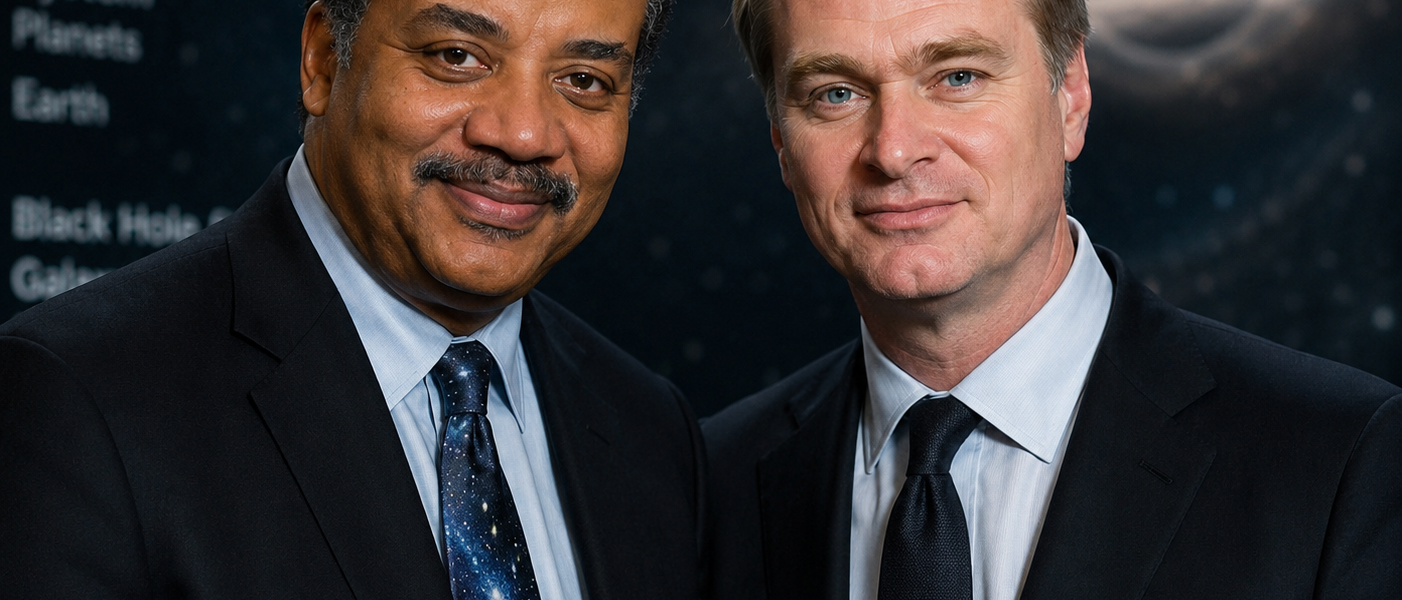

Science and storytelling have always shared a unique relationship. While science seeks to explain how the universe works, storytelling helps people imagine what those discoveries could mean for humanity. Few public figures have brought these two worlds together as effectively as Neil deGrasse Tyson and Christopher Nolan. One is a renowned astrophysicist dedicated to making science accessible, while the other is an acclaimed filmmaker known for creating thought-provoking movies that explore time, space, and the human experience.
Together, Neil deGrasse Tyson and Christopher Nolan have inspired millions of people to look beyond everyday life and think more deeply about the mysteries of the universe. Their work has encouraged audiences to ask questions, challenge assumptions, and develop a greater appreciation for both scientific knowledge and creative storytelling.
Making Science More Accessible
One of the biggest reasons for their influence is their ability to make complex ideas understandable. Scientific concepts can often seem difficult or intimidating, but effective communication changes that perception. Through books, interviews, television appearances, and educational programs, science becomes engaging instead of overwhelming.
Many people who once believed astronomy or physics was too complicated have developed a genuine interest after being introduced to these subjects in an entertaining and relatable way. This approach has inspired students, educators, and lifelong learners to continue exploring science beyond the classroom.
Storytelling That Sparks Curiosity
Great films do more than entertain—they encourage audiences to think. Modern cinema has shown that audiences enjoy stories that challenge their understanding of reality rather than simply providing straightforward entertainment.
The creative partnership between scientific accuracy and imaginative storytelling has become increasingly important. Discussions surrounding Neil deGrasse Tyson and Christopher Nolan often highlight how scientific ideas can strengthen fictional narratives without limiting creativity. Instead, science becomes a foundation that makes extraordinary stories feel believable.
Inspiring the Next Generation
Young people today are constantly exposed to digital content competing for their attention. Despite this, educational content remains popular when it is presented in an engaging way.
Many students have reported developing an interest in astronomy, physics, engineering, or filmmaking after watching documentaries, interviews, or films connected with Neil deGrasse Tyson and Christopher Nolan. Their influence extends beyond entertainment because they encourage curiosity, critical thinking, and lifelong learning.
Teachers also benefit from this interest by using movies and scientific discussions as classroom examples to explain difficult concepts. This creates a bridge between education and popular culture.
Encouraging Critical Thinking
Modern audiences are increasingly interested in content that makes them think rather than simply consume information. Questions about black holes, time dilation, artificial intelligence, and the future of humanity have become common topics across social media and online communities.
The conversations inspired by Neil deGrasse Tyson and Christopher Nolan rarely end when a lecture or movie finishes. Instead, viewers continue researching ideas, debating theories, and exploring scientific discoveries on their own. This ongoing curiosity represents one of their greatest contributions to public education.
Critical thinking is valuable not only in science but also in everyday decision-making. Learning to question information, evaluate evidence, and remain curious benefits people in countless aspects of life.
The Power of Entertainment
Entertainment has always been one of the strongest ways to communicate ideas. Films, documentaries, podcasts, and interviews reach audiences that traditional educational materials sometimes cannot.
Rather than separating education from entertainment, today’s creators increasingly combine both. This approach helps people absorb information naturally while remaining engaged throughout the experience.
The popularity of Neil deGrasse Tyson and Christopher Nolan demonstrates that audiences appreciate intelligent content that respects their curiosity. Viewers enjoy being challenged when stories are presented in an accessible and emotionally engaging way.
Global Cultural Impact
Their influence extends far beyond English-speaking audiences. Around the world, translated books, dubbed films, educational videos, and online discussions have introduced millions of people to scientific thinking and philosophical questions.
International fan communities regularly analyze scientific concepts presented in films while comparing them with real-world discoveries. This has created a unique cultural phenomenon where entertainment encourages global conversations about science.
As technology continues to connect people across countries, this influence continues to grow through social media platforms, educational websites, podcasts, and streaming services.
Balancing Science and Creativity
One reason for their lasting popularity is their balance between factual knowledge and creative imagination. Scientific accuracy provides credibility, while storytelling captures emotions and inspires wonder.
Discussions involving Neil deGrasse Tyson and Christopher Nolan often emphasize that science does not reduce creativity—it expands it. Understanding the universe provides endless inspiration for stories that explore humanity’s future, our place in space, and the possibilities that lie ahead.
This balance encourages both scientists and artists to appreciate each other’s work rather than viewing the two disciplines as separate worlds.
A Lasting Legacy
Influence is measured not only by popularity but also by the ideas people carry forward. Inspiring curiosity, encouraging education, and promoting thoughtful discussion create a lasting impact that extends across generations.
The continued relevance of Neil deGrasse Tyson and Christopher Nolan reflects society’s growing interest in meaningful entertainment and accessible science. Their work reminds audiences that learning can be exciting, imagination has value, and asking questions is an essential part of personal growth.
The influence of Neil deGrasse Tyson and Christopher Nolan on modern audiences goes far beyond science or filmmaking alone. Together, they have helped shape a culture that values curiosity, creativity, and critical thinking. Whether someone discovers a passion for astronomy, develops a love for complex storytelling, or simply begins asking deeper questions about the universe, their contributions continue to inspire millions around the world. As technology and education continue to evolve, their impact will likely remain significant for many years to come.